

Some of the links in this post may be affiliate links, which means I may receive a commission if you click on them and make a purchase. However, this comes at no additional cost to you, and I only recommend products and services that I truly believe in. Please note that I am not responsible for the quality, accuracy, timeliness, reliability, or any other aspect of the products and services sold on external websites linked to this post.
I’ve been living a more mindful lifestyle for about 5 years now, and switching from conventional skincare products to natural products was a game-changer for my skin! I dealt with persistent acne, and I had an issue of always needing to pick and pop. I had scars and red bumps 100% of the time. In conjunction with working on my gut health and removing harmful products out of my routine, my scars have healed, and I rarely get pimples! (stress/diet/hormonal shifts are often the cause when they do pop up.) Let’s dive into the dangers of conventional products, reasons you may want to switch to natural, and the deal with seed oils.
Why conventional skincare can be harmful
While many skincare products on the market advertise that they can improve the appearance of our skin, more often than not, they contain harmful ingredients that can cause more harm than good. Let’s go over some of the most common toxic ingredients found in skin care products and the damage they can do to our health and skin:
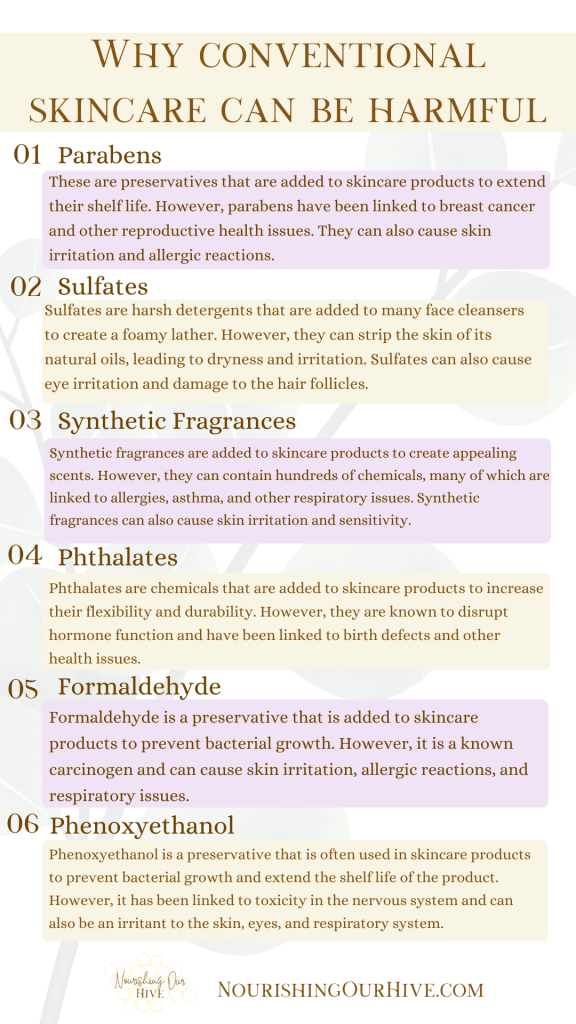
- Parabens: These are preservatives that are added to skincare products to extend their shelf life. However, parabens have been linked to breast cancer and other reproductive health issues. They can also cause skin irritation and allergic reactions.
- Sulfates: Sulfates are harsh detergents that are added to many face cleansers to create a foamy lather. However, they can strip the skin of its natural oils, leading to dryness and irritation. Sulfates can also cause eye irritation and damage to the hair follicles.
- Synthetic fragrances: Synthetic fragrances are added to skincare products to create appealing scents. However, they can contain hundreds of chemicals, many of which are linked to allergies, asthma, and other respiratory issues. Synthetic fragrances can also cause skin irritation and sensitivity.
- Phthalates: Phthalates are chemicals that are added to skincare products to increase their flexibility and durability. However, they are known to disrupt hormone function and have been linked to birth defects and other health issues.
- Formaldehyde: Formaldehyde is a preservative that is added to skincare products to prevent bacterial growth. However, it is a known carcinogen and can cause skin irritation, allergic reactions, and respiratory issues.
- Phenoxyethanol: Phenoxyethanol is a preservative that is often used in skincare products to prevent bacterial growth and extend the shelf life of the product. However, it has been linked to toxicity in the nervous system and can also be an irritant to the skin, eyes, and respiratory system.
Why you should switch to natural
Switching to a natural skincare routine may take a bit of time. It’s not always feasible to toss every product you own and replace it all at once. But it’s definitely worth the work to get up to the point where everything you use is natural and truly nourishing! Here are some benefits of using natural:
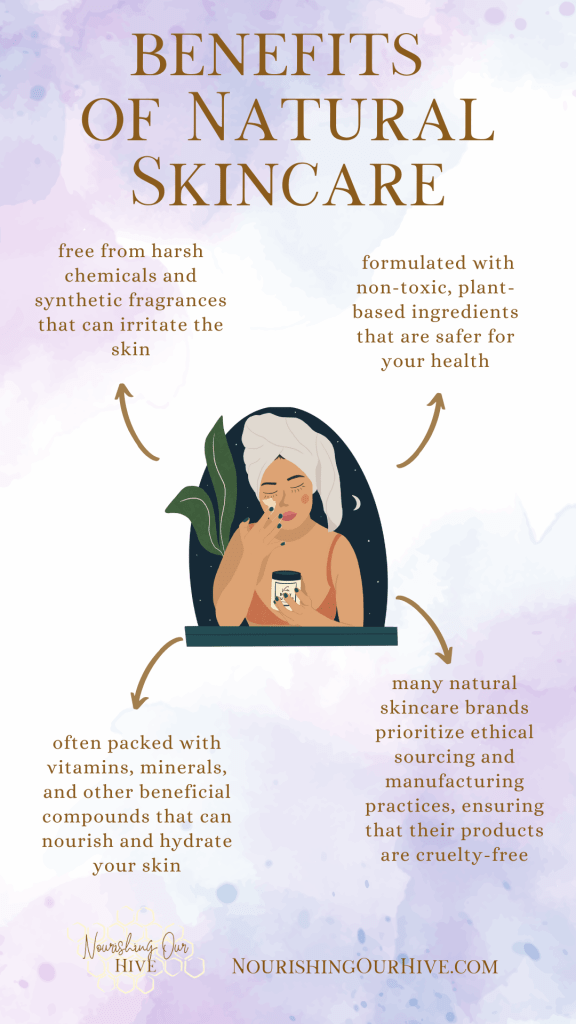
- Gentle on the Skin: Natural skincare products are free from harsh chemicals and synthetic fragrances that can irritate the skin. They are often formulated with gentle, plant-based ingredients that work in harmony with your skin’s natural chemistry.
- Better for Sensitive Skin: If you have sensitive skin, natural skin care products can be a great choice. Many natural ingredients, such as aloe vera and chamomile, have soothing properties that can help to calm inflamed or irritated skin.
- Non-Toxic: Conventional skincare products often contain harmful chemicals like parabens, phthalates, and sulfates that can disrupt hormone levels and lead to other health concerns. Natural skincare products are formulated with non-toxic, plant-based ingredients that are safer for your health.
- Rich in Nutrients: Natural skincare products are often packed with vitamins, minerals, and other beneficial compounds that can nourish and hydrate your skin. For example, oils like argan and jojoba are rich in antioxidants and essential fatty acids that can help to protect and rejuvenate your skin.
- Ethical: Many natural skincare brands prioritize ethical sourcing and manufacturing practices, ensuring that their products are cruelty-free and free from exploitation. By choosing natural skincare products, you can support companies that align with your values.
What are seed oils?
Seed oils are exactly that, oil that has been expressed from seeds. Preferably we want these oils to be “cold-pressed” to avoid any heat changing the chemical composition of the oils. Seed oils have become a popular ingredient in many skincare products due to their high concentration of essential fatty acids and other beneficial compounds. Here are some skincare-friendly seed oils and why they are safe to use topically:
- Jojoba Oil: You may recognize this oil! Jojoba oil is derived from the seeds of the jojoba plant, and is a popular ingredient in many skincare products due to its moisturizing properties. It is high in vitamin E and other antioxidants, which help to protect the skin from free radical damage. Jojoba oil is also non-comedogenic, which means it won’t clog pores or cause breakouts.
- Rosehip Oil: Rosehip oil is extracted from the seeds of the rosehip fruit, and is rich in vitamins A and C, as well as essential fatty acids. It is known for its ability to improve the appearance of scars, stretch marks, and fine lines. It has powerful anti-inflammatory properties that are beneficial for acne and acne-prone skin. Rosehip oil is also non-greasy and absorbs easily into the skin, making it a great choice for all skin types.
- Grapeseed Oil: Grapeseed oil is extracted from the seeds of grapes, and is rich in antioxidants and linoleic acid, a type of essential fatty acid. It is lightweight and absorbs easily into the skin, making it a great choice for oily or acne-prone skin. Grapeseed oil is also high in vitamin E, which helps to nourish and protect the skin.
- Apricot Oil: Apricot oil is a light, non-greasy oil that absorbs quickly into the skin, making it an excellent moisturizer for all skin types. It is rich in antioxidants like vitamins A and E, which help to protect the skin from free radical damage and promote collagen production. And it’s anti-inflammatory properties are great for acne, as it can help to soothe irritated or inflamed skin.
- Raspberry Seed Oil: This oil has some miraculous benefits! Raspberry seed oil contains natural SPF properties that can help to protect the skin from UV damage. It is high in antioxidants like vitamin E, which can help with skin elasticity. It is also rich in omega-3 and omega-6 fatty acids perfect for nourishing the skin.
- Blueberry Seed Oil: Blueberry seed oil is rich in antioxidants like vitamin C, which can help to protect the skin from free radical damage and promote collagen production. This is perfect for those searching for anti-aging benefits. It is rich in omega-3 and omega-6 fatty acids, which can help to nourish and hydrate the skin. It also has anti-inflammatory properties that can help to soothe irritated or inflamed skin. This would be helpful for those suffering from acne or puffy eye bags.
While some seed oils can be harmful when ingested due to their high levels of polyunsaturated fatty acids (PUFAs), these concerns don’t necessarily apply when using them topically. When applied to the skin, seed oils are absorbed by the outer layers of the skin and do not enter the bloodstream in significant amounts. Additionally, many seed oils are rich in antioxidants and other compounds that can help to protect the skin from damage caused by free radicals.
Resources
- Toxic Ingredients in Skincare Products:
- https://www.ncbi.nlm.nih.gov/pmc/articles/PMC6845900/
- https://www.ewg.org/skindeep/
- https://www.bustle.com/p/6-harmful-ingredients-in-skin-care-products-you-should-avoid-according-to-a-dermatologist-44453
- https://www.ewg.org/skindeep/ingredients/704811-PHENOXYETHANOL/
- https://www.ncbi.nlm.nih.gov/pmc/articles/PMC5490517/
2. Skin Friendly Seed Oils
- https://www.byrdie.com/face-oils-for-acne-prone-skin-5071882
- https://www.harpersbazaar.com/beauty/skin-care/a19842554/best-face-oils-for-acne-prone-skin/
- https://theskincareedit.com/2020/03/09/best-face-oils-acne-prone-skin
3. Benefits of Using Natural Skincare
 Victoria Naturally