

Some of the links in this post may be affiliate links, which means I may receive a commission if you click on them and make a purchase. However, this comes at no additional cost to you, and I only recommend products and services that I truly believe in. Please note that I am not responsible for the quality, accuracy, timeliness, reliability, or any other aspect of the products and services sold on external websites linked to this post.
In today’s fast-paced world, we often turn to quick fixes for our health concerns. However, many of these solutions come with unwanted side effects and can be harmful in the long term. That’s why more and more people are turning to natural remedies, such as herbal medicine, to support their health and well-being. Gone are the days of band-aid medicines that simply mask symptoms versus supporting our amazing and very capable bodies.
I’m about 5 years deep into learning more about herbs, their benefits, how they work with the body, possible adverse effects, and more. Herbal medicine has been used for thousands of years to treat a wide range of health conditions. I think that makes me a mega-baby herbalist in training, haha! But thanks to all those before us, we have more information regarding these plants that Mother Earth has provided than ever before!
Did you know that many modern medicines are actually derived from natural sources, such as aspirin from willow bark and digitalis from foxglove? However, unlike pharmaceutical drugs, herbal remedies are often gentler on the body and can have fewer side effects. While pharmaceuticals absolutely have their place in the world, and I am so grateful that we have these options, it’s a wonder how these drugs can often cause so many other problems. Take a look around; you’ll see people taking one medication for something, experiencing side effects from said medications, and then being prescribed something for the symptoms the other drug has caused. And it can go on and on and on for some people!
At the beginning of my journey to natural health, I often referenced herbal blogs for information on herbs. At the time, I wasn’t actively using herbs in the home, but they were definitely intriguing and even opened up the door to more rabbit holes (like the cascade of interventions in the medical world!) Within the last 3 years, I’ve been referencing herbalists like Richard Whelan Medical Herbalist, and Rosemary Gladstar, two renowned experts in the field of herbal medicine. Whelan is a highly respected medical herbalist with over 30 years of experience, and Gladstar is a prolific author and herbalist who has been practicing for over 40 years.
So, what are some of the benefits of using natural remedies for common ailments? Let’s take a look:
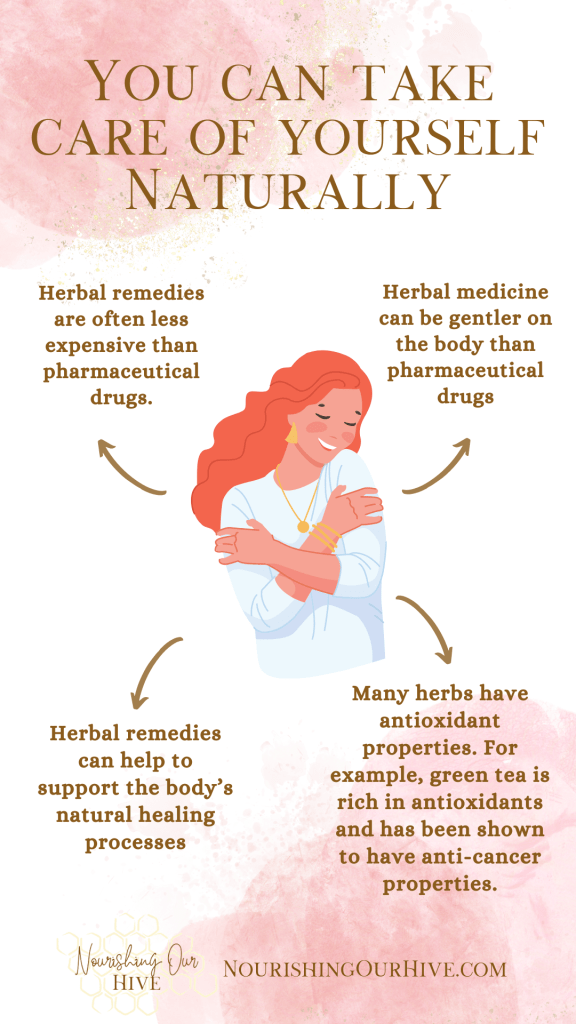
- Herbal remedies are often less expensive than pharmaceutical drugs. This is because they can be grown locally and don’t require expensive manufacturing processes.
- Herbal medicine can be gentler on the body than pharmaceutical drugs, making it a great option for people who are sensitive to certain medications.
- Many herbs have anti-inflammatory properties, which can help to reduce pain and swelling in the body. For example, ginger has been shown to be effective in treating nausea, while turmeric can help to reduce inflammation in conditions such as arthritis.
- Herbal remedies can help to support the body’s natural healing processes. For example, echinacea is often used to boost the immune system and prevent colds and flu.
- Many herbs have antioxidant properties, which can help to protect the body from damage caused by free radicals. For example, green tea is rich in antioxidants and has been shown to have anti-cancer properties.
Here are some of the dangers associated with common over-the-counter medications:
- Ibuprofen: This nonsteroidal anti-inflammatory drug (NSAID) is commonly used to treat pain, fever, and inflammation. However, long-term use or taking high doses can lead to stomach ulcers, kidney damage, and an increased risk of heart attack or stroke.
- Acetaminophen: This pain reliever and fever reducer is often used as an alternative to ibuprofen. However, taking too much acetaminophen can cause liver damage, which can be fatal in some cases.
- Allergy medications: OTC allergy medications like antihistamines and decongestants can cause a range of side effects, including drowsiness, dry mouth, blurred vision, and dizziness. In some cases, they can also lead to high blood pressure, heart palpitations, and difficulty urinating.
- Cough and cold medications: These medications are commonly used to treat symptoms like cough, congestion, and sore throat. However, they can cause side effects such as dizziness, drowsiness, and nausea. In rare cases, they can also cause liver damage or even death if taken in high doses.
- Aspirin: This drug is often used to treat pain, fever, and inflammation. However, taking too much aspirin can cause stomach bleeding, kidney damage, and an increased risk of heart attack or stroke.
It’s important to use OTC drugs only as directed and to follow the recommended dosages carefully. If you have any underlying health conditions or are taking other medications, it’s important to speak with your healthcare provider before using any OTC drugs.
What are some ailments that I can handle on my own without conventional medicine?
While conventional medicine can be effective in treating a variety of health conditions, it’s important to remember that there are often natural alternatives available that can be just as effective and come with fewer side effects. If you’re here, you’re probably already open to trying some more natural alternatives. If you’re pretty new to this all, here are some common ailments that you may not know can be treated at home using natural remedies:
- Headaches: For occasional headaches, try drinking plenty of water and using a cold or warm compress on your forehead. You can also try aromatherapy by inhaling lavender essential oil or peppermint oil. Herbal remedies for headaches include feverfew, which can help reduce the frequency and severity of migraines, and willow bark, which contains salicin, a compound similar to aspirin that can help relieve pain. It’s important to note that there are a ton of causes for headaches, so if you’re having headaches frequently, narrowing down the why will help you locate a remedy that works for you.
- Sore throat: Gargling with salt water can help ease the pain and inflammation of a sore throat. You can also try drinking hot tea with honey and lemon, or using a humidifier to keep the air moist. Herbal remedies for a sore throat include peppermint, which can give your throat that nice cooling effect; marshmallow root, which can help soothe the throat and reduce inflammation; and slippery elm, which can help coat the throat and provide relief. If you don’t have the bandwidth to make your own remedies, grab this herbal throat spray.
- Insomnia: Try creating a relaxing bedtime routine, such as taking a warm bath or practicing meditation or deep breathing exercises. You can also try drinking chamomile tea or taking valerian root, which has been shown to promote relaxation and sleep. Other herbal remedies for insomnia include passionflower, which can help reduce anxiety and promote sleep, and lemon balm, which can help reduce stress and improve sleep quality. Or try this herbal tincture.
- Digestive issues: Ginger can help ease nausea and indigestion, while peppermint can help relieve bloating and gas. Drinking plenty of water and eating fiber-rich foods can also help regulate digestion. Other herbal remedies for digestive issues include fennel, which can help relieve gas and bloating, and chamomile, which can help reduce inflammation and soothe the stomach. It really depends on the cause of your digestive issues! There is so much to dive into when it comes to the digestive system. You can take a look here to view some digestive-supporting products and resources!
- Muscle aches: Epsom salt baths can help ease muscle soreness and inflammation. You can also try using a topical cream containing arnica or applying a warm compress to the affected area. Herbal remedies for muscle aches include turmeric, which can help reduce inflammation and relieve pain, and devil’s claw, which can help reduce pain and stiffness. I absolutely love this muscle rub! I have done it all, from aspercreme, and tiger balm, to icy hot. Magic Muscle Ease is second to none!
- Cold and flu symptoms: Drinking hot tea with honey and lemon can help soothe a sore throat and relieve congestion. You can also try taking echinacea or elderberry supplements, which have been shown to support and boost the immune system and reduce the severity and duration of cold and flu symptoms. Other herbal remedies for cold and flu symptoms include garlic, which can help boost the immune system and reduce the severity of symptoms, and Andrographis, which can help reduce the duration of cold and flu symptoms.
When it comes to using herbal medicine, it’s important to work with a qualified practitioner who can help you to choose the right remedies for your individual needs. Richard Whelan Medical Herbalist and Rosemary Gladstar are both excellent resources for anyone interested in exploring the world of herbal medicine.
In conclusion, natural remedies such as herbal medicine can be safe, effective, and affordable options for treating common ailments. By incorporating these remedies into your daily routine, you can support your body’s natural healing processes and promote overall health and well-being.

Resources:
- Dangers of over-the-counter drugs:
- “The Risks of Over-the-Counter Pain Relievers” by Harvard Health Publishing: https://www.health.harvard.edu/pain/the-risks-of-over-the-counter-pain-relievers
- “Are Allergy Medications Safe? Potential Side Effects of Antihistamines and Decongestants” by Cleveland Clinic: https://health.clevelandclinic.org/are-allergy-medications-safe-potential-side-effects-of-antihistamines-and-decongestants/
- “The Hidden Dangers of Acetaminophen” by Consumer Reports: https://www.consumerreports.org/drug-safety/the-hidden-dangers-of-acetaminophen/
- Natural remedies for common ailments:
- “Herbs and Natural Remedies for Insomnia” by Healthline: https://www.healthline.com/health/insomnia-herbs
- “Herbal Remedies for Digestive Problems” by Verywell Health: https://www.verywellhealth.com/herbal-remedies-for-digestive-problems-88232
- “Natural Remedies for Headaches: Headache Relief Without Drugs” by University of Maryland Medical Center: https://www.umm.edu/health/medical/altmed/condition/headache
- Herbs for common ailments:
- “9 Herbs for Muscle Pain and Soreness” by Healthline: https://www.healthline.com/health/herbs-for-muscle-pain-and-soreness
- “Herbs for Cold and Flu” by National Center for Complementary and Integrative Health: https://www.nccih.nih.gov/health/herbs-at-a-glance/herbs-for-cold-and-flu
 Victoria Naturally